David ATTACKS Kody! Public Parking Lot Brawl CAUGHT On CCTV!
They say silence can be noble, a sign of restraint or wisdom—but in the complicated world surrounding the Brown family, silence became something else entirely. It wasn’t peaceful. It wasn’t neutral. It was a tool—one used for years to avoid confrontation, suppress tension, and maintain a fragile image. That silence stretched across seasons, across relationships, across deeply personal grievances that were never fully addressed. And then, on what seemed like an ordinary afternoon in Utah, that long-standing silence shattered.
This wasn’t a moment captured by production crews or shaped by careful editing. There were no staged interviews, no dramatic music cues, no confessionals. Instead, there were just two men, a public parking lot, and years of unresolved emotions finally surfacing in real time. What unfolded in that unexpected encounter has since become the kind of moment fans speculate about but rarely see—a raw, unfiltered confrontation that felt more real than anything shown on television.
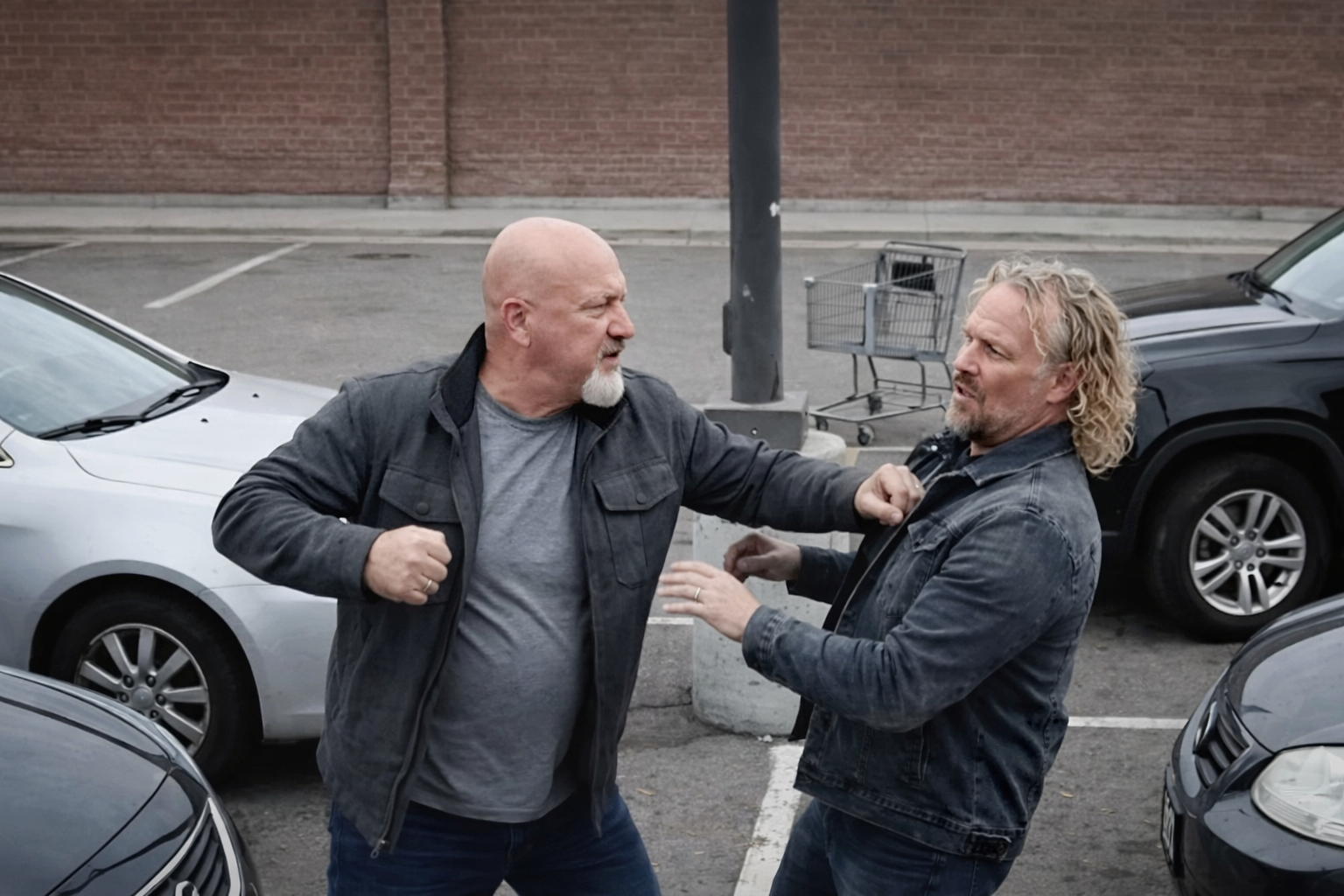
At the center of it all was David Woolley, a man who was never supposed to be part of the original narrative. Unlike the familiar faces viewers had followed for years, David didn’t come from the same world. He wasn’t molded by the dynamics of plural marriage or shaped by the pressures of reality television. He was, by all accounts, grounded, practical—a builder by trade, someone who creates stability rather than chaos. But even the most grounded individuals have limits, and this encounter revealed exactly where his stood.
To understand why this confrontation carried so much weight, it’s important to look at the history that led up to it. For over a decade, audiences watched a complex family structure unfold—one that was rooted in shared beliefs but increasingly strained by emotional imbalance. Over time, cracks began to show. What once appeared cohesive started to unravel, particularly as certain relationships revealed deeper dissatisfaction.




Christine Brown’s journey became one of the most emotionally significant arcs in that story. Initially devoted and committed, she gradually shifted from quiet acceptance to visible unhappiness. Her eventual decision to leave wasn’t explosive—it didn’t come with dramatic ultimatums or sudden upheaval. Instead, it was calm, resolute, and deeply final. That departure marked a turning point not only for her life but for the entire dynamic that had defined the family for years.
In the aftermath, reactions were mixed but intense. While some defended Kody’s perspective, many viewers saw Christine’s departure as long overdue. Discussions across online communities painted a picture of emotional neglect and imbalance. People revisited past moments, connecting dots that once seemed isolated. What had been presented as occasional tension now looked like a consistent pattern.
Then came David.
When Christine introduced him to the public, the contrast was immediate and striking. Where there had once been tension, there now appeared ease. Where there had been emotional distance, there was now attentiveness. David’s demeanor was calm, steady, and protective—qualities that didn’t go unnoticed. Their relationship moved quickly, but to many observers, it felt grounded in something genuine.
Meanwhile, Kody’s public commentary remained layered with frustration. He spoke of betrayal, of loyalty, of sacrifices he believed went unrecognized. Yet, for many viewers, what stood out most was what seemed absent—reflection, accountability, or acknowledgment of Christine’s perspective. This disconnect became a focal point, especially as her new relationship continued to flourish.
According to multiple accounts, the encounter happened in a public setting—reports vary between a grocery store and a gas station, but the details share a consistent thread. It was daytime. There were witnesses. And there was no expectation of what was about to unfold.
Kody was reportedly there first, going about his business. Then David arrived. At first, there was simply recognition—a moment of silent understanding between two men whose lives had become intertwined through one woman and years of shared history, even if indirectly.
Then came the approach.
David didn’t storm in. He didn’t raise his voice immediately or create a scene. Instead, he walked up calmly, deliberately. Witnesses later described his tone as controlled but firm. He wasn’t there to provoke chaos—he was there to address something that had gone unresolved for far too long.
What he said next reportedly shifted everything.
Rather than launching into anger, David established a boundary. He addressed the ongoing public commentary, particularly the way Christine had been referenced. According to those who later recounted the moment, his message was clear: whatever grievances existed, they should no longer involve diminishing her or using her name as part of an ongoing narrative.
At that point, the tone of the exchange changed.
Kody, reportedly caught off guard, responded defensively. He insisted that the situation was more complicated than it appeared, that outsiders didn’t fully understand the dynamics at play. But this wasn’t a familiar setting where he could control the narrative or redirect the conversation. This was direct, immediate, and personal.
David didn’t retreat.
What followed wasn’t a physical altercation—there were no blows, no intervention required—but the tension was undeniable. Witnesses described it as intense, almost like a reckoning rather than a fight. It was the kind of confrontation built not on impulse, but on years of observation and restraint finally giving way.

What made the moment so significant wasn’t just the exchange itself, but what it symbolized.
For years, much of the family’s story had been filtered through a controlled lens. Scenes were edited. Conversations were shaped. Context was selectively revealed. But here, in a public space with no cameras directing the outcome, the narrative stepped خارج that controlled environment and into reality.
And in that reality, David took on a role viewers had never truly seen before—not just as a partner, but as an advocate. Someone willing to step forward and challenge a long-standing dynamic directly.
When word of the incident spread, reactions were immediate and divided.
Many online voices expressed support, seeing the confrontation as a long-overdue moment of accountability. Some described it as someone finally saying what had been left unsaid for years. Others viewed it as a shift in power—a moment where the established hierarchy no longer held the same influence.
But not everyone agreed.
Some cautioned against celebrating confrontation, pointing out that public disputes rarely resolve private issues. Others questioned whether the situation blurred lines between personal boundaries and public spectacle, especially given the individuals involved.
From a legal perspective, nothing significant came of the incident. There were no reports of violence or official complaints. By all accounts, it remained a verbal exchange—intense, but contained.
Socially, however, its impact was far more substantial.
Moments like this have a way of reshaping perception. They challenge carefully constructed narratives and introduce an element of unpredictability. In this case, it forced a reevaluation—not just of the individuals involved, but of the story itself.
Looking back, many began connecting past moments in a new light. Scenes that once seemed isolated took on deeper meaning. Expressions of loneliness, discussions about imbalance, subtle signs of disconnect—all of it formed a clearer picture when viewed as part of a continuous thread.
And that thread led directly to that parking lot.
For Kody, the encounter represented something new—a challenge from outside the structure he had long navigated. It wasn’t a conversation he could frame or control. It was direct, personal, and unfiltered.
For Christine, it marked a continuation of her transition—from someone who once felt unheard to someone now supported and defended.
And for David, it solidified his place not just as a partner, but as someone willing to confront discomfort head-on, even in the most unexpected circumstances.
In the world of reality television, authenticity is often debated. Viewers question what’s real and what’s curated, what’s spontaneous and what’s staged. But occasionally, something happens beyond the boundaries of production—something unscripted, unplanned, and undeniably genuine.
Those are the moments that linger.
Because they remind us that behind every storyline, every episode, and every edited scene, there are real people with real emotions—emotions that don’t always stay contained within the frame.
And sometimes, those emotions finally meet.
On that ordinary day, in an ordinary parking lot, they did.